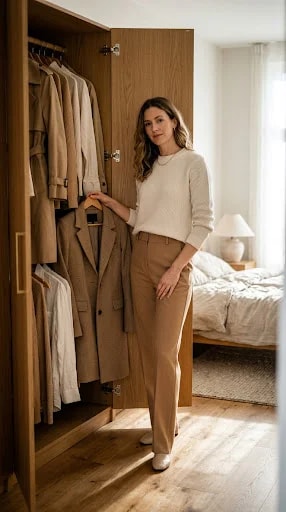
The wardrobe doors stay open in this bedroom, and that is the whole point. Inside, the rail reads like a colour card: cream, oatmeal, camel, a single flash of white shirt collar. Nothing shouts, nothing competes. On the left, the wooden frame is heavy and warm; on the right, morning light comes through sheer curtains and softens everything it touches. Standing between the two, the woman in the textured cream sweater and high-waisted camel trousers looks less like she got dressed and more like she stepped out of the wardrobe itself. That is what a tight palette does — it makes the person the focal point instead of the clothes.
For a 180cm frame, the palette is only half the trick. The other half is the unbroken vertical line. The sweater is cropped just enough to meet the trouser waist without a gap, and the trousers run clean from hip to ankle with a single soft break over pointed flats. No contrast belt chopping the body in two, no cropped jacket cutting the silhouette at the widest point. When you are tall, you do not need to create length — you need to stop interrupting it. A monochrome column of cream and camel does that quietly, and it photographs beautifully in daylight, which is why scenes like this one feel so calm.
Look closely at the rail and you will notice how few things are actually there. Three blazers in sand, taupe and ivory. A trench in a slightly deeper camel. Four white shirts on matching wooden hangers, all the same shape, because once you find the one that fits your shoulders and your arm span, repeating it is a strategy rather than a compromise. Tall shoppers learn this early: sleeve length and shoulder seam are the two measurements that cannot be faked by a tailor, so buy for those and let everything else be adjusted.
The trouser rail deserves its own note. High-waisted, wide-leg and cut long enough to graze the top of the foot — that is the shape that carries a 180cm frame without looking like borrowed clothing. Keep the rise high, the pleat soft, and the hem honest. Pointed-toe flats are the quiet finisher here; they extend the line of the leg without adding the visual weight of a heel, and they let the trouser do the talking.
What makes the room work is that the wardrobe does not fight the bedroom. Light oak, beige lamp, textured rug, unmade white linens — the same three tones, repeated at a larger scale. Getting dressed in a space like that becomes a two-minute decision instead of a twenty-minute negotiation. Open the doors, see cream, camel and white, choose a column, add one layer, leave. The elegance is not in the volume of clothing. It is in the fact that everything on the rail already agrees with everything else.