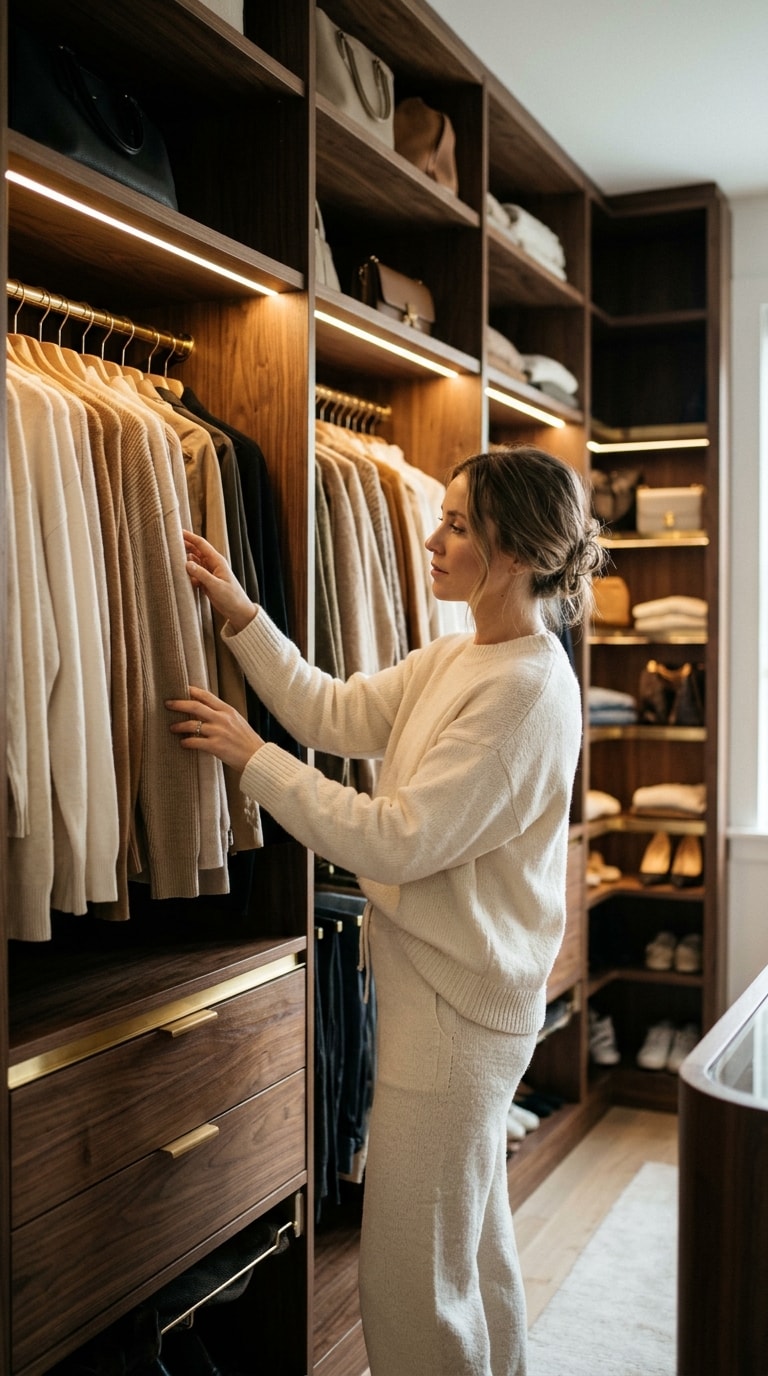
There is a specific moment this wardrobe was designed around: standing at the rail with one hand on the hangers, deciding. In the image, the cream knit and textured skirt read almost identically in tone, and yet the difference between them is obvious — because the light is doing its job. That is the real argument for LED wardrobe lighting. It is not about making clothes look expensive under a spotlight. It is about letting you see what you own clearly enough to choose it quickly, in a room warm enough that you want to stay a minute longer.
Two runs of LED strip are doing two different jobs here, and it is worth copying both. The strips tucked under the shelves graze the folded sweaters from above, pulling out the texture of the knits and casting a soft pool of light onto the shelf below. The strip above the hanging rail washes down over the garments so shoulders, sleeves and hems all read as separate shapes instead of a dark block of fabric. Together they mean no shadow falls exactly where you need to look. If you are specifying only one, choose the above-rail run — it is the one that makes browsing feel effortless.
Placement matters more than brightness. Mount shelf strips toward the back edge of the shelf and hide them behind a small lip or aluminium channel, so you see the glow on the clothes rather than the diode itself. Use a diffused channel on the rail strip for the same reason: dots of light on a camel coat look cheap, an even wash looks considered. Aim for 2700K to 3000K with a high colour rendering index, since warm light with poor colour accuracy turns cream, ivory and oatmeal into one muddy beige. Put the two runs on separate dimmer circuits, and add a door or motion sensor so the wardrobe lights only when someone is actually in it.
The materials deserve a mention too, because light and finish argue with each other. Dark walnut cabinetry absorbs light, so it needs a little more output than a pale oak interior to reach the same readable brightness. Brass pulls catch the strips beautifully and give the eye a warm glint to follow along the drawer line. Matte finishes — the knitwear, the textured skirt, the felted storage boxes — hold that soft glow rather than throwing it back, which is why the whole scheme feels quiet instead of glossy.
Get the layers right and the room changes behaviour. You stop dressing in the doorway, squinting. You start browsing, lifting a sleeve, putting something back. The ottoman in the corner stops being decoration and becomes the place you sit to pull on boots. That is what integrated LEDs are really for: not display, but the small daily luxury of seeing your own wardrobe properly.