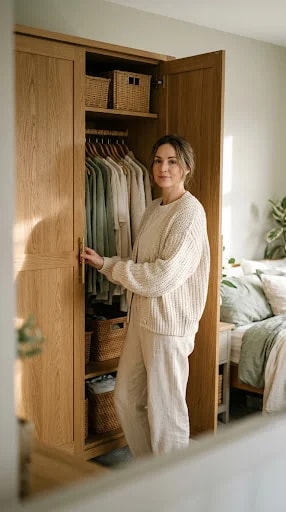
There is a particular moment that sells a wardrobe better than any styled photograph of closed doors: the hand on the handle, the door swung wide, the inside revealed in daylight. That is when a two-door piece stops being furniture and becomes part of the room's atmosphere. If the interior is a jumble of mismatched hangers and half-folded knits, the whole bedroom feels unsettled. If it is quiet and tonal, the room exhales. The good news is that the fix is editing, not buying.
Start with the rail, because it is the first thing the eye lands on. Give every garment the same hanger — light wood, if the wardrobe is oak — so the rail reads as one horizontal line instead of a clatter of plastic. Then sort by tone rather than by category: sage, then cream, then white, moving left to right. This single move creates a soft gradient that looks intentional from across the room, and it makes getting dressed faster because your eye finds the shade before it finds the sleeve. Keep roughly a hand's width of breathing room between garments; a rail packed tight kills the airiness that makes a two-door wardrobe feel generous.
The upper shelf is where calm is won or lost. Woven baskets in natural fiber, matched in size, hide the off-season pieces and the things you do not need to see daily. Line them up with their handles facing out and leave a sliver of space between each one so the shelf does not look crammed. Below the hanging rail, shallow baskets do the same job for folded items — a stack of linen in cream and sage, folded to the width of the basket so nothing spills over the edge.
Texture does the rest. Oak, woven fiber, cotton, and washed linen all sit in the same earthy register, so nothing fights. Notice how daylight arriving from one side softens the shadows inside the wardrobe; that gentle fall of light is only possible when the contents are not pressed against the doors. Resist the urge to fill the last few inches. Empty space inside a wardrobe reads as luxury, not waste.
The real test is never the closed door. Stand back with the doors open and ask whether the inside could pass as a corner of the room — because on the days you forget to close it, it will be.