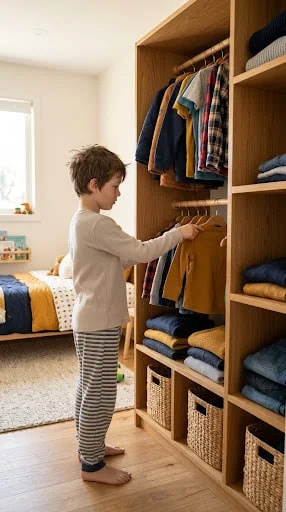
There is a quiet magic in the moment a child reaches for the day's outfit, unassisted. The photograph captures this essential step toward self-reliance, where a simple, low-hanging wardrobe design becomes a tool for empowerment. The boy's posture is not one of struggle or frustration—it's one of calm focus. His hand finds a mustard-yellow garment effortlessly, thanks to rods and shelves placed squarely within his own reach. This is a space built for his success, not an adult's convenience.
The wardrobe itself is a model of clear, visual organization. Light wood frames the interior, creating a warm and neutral backdrop for the clothes. Shirts hang neatly on low bars, while folded stacks of denim and knits are arranged on open shelves. Woven baskets for smaller items sit within easy grasp. This system avoids the chaos of deep drawers and overstuffed racks, presenting a manageable landscape a five-to-ten-year-old can both understand and maintain.
This design philosophy extends beyond mere storage. It directly supports the development of daily habits and personal responsibility. When a child can see all his options and select his clothes without help, it builds confidence and a sense of ownership over his space. The morning transition becomes smoother, less reliant on parental intervention, and imbued with a quiet pride. The room’s overall calm—the soft light, the tidy bed, the textured rug—is a direct result of this functional harmony.
Ultimately, the image argues for a wardrobe that is not just a piece of furniture, but a considered part of a child's environment. It demonstrates that the best kids' rooms are those that work with the child, not around him. By prioritizing accessibility and visual clarity, this open wardrobe design nurtures independence in the most practical, beautiful way, turning a daily task into a small, personal triumph.