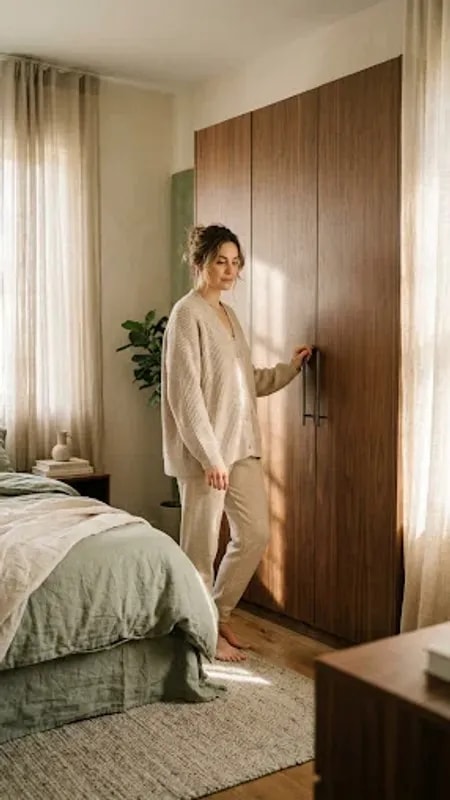
An open wardrobe in a small bedroom is a gamble. Leave it half-styled and the whole room reads as clutter; edit it carefully and the same piece becomes the calmest corner of the house. The trick is to treat the inside of the wardrobe as part of the room's decor, not as hidden storage you only open in a hurry. When the doors stay open, every shelf is on display, so the arrangement has to be deliberate, generous with breathing room, and built around a palette that matches the walls.
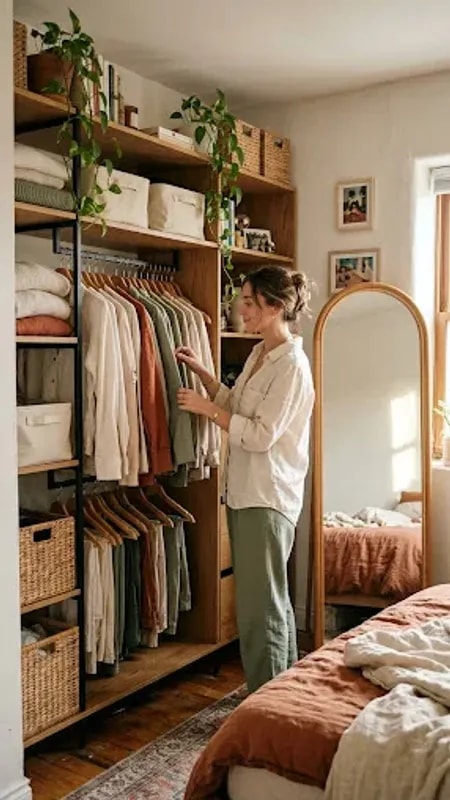
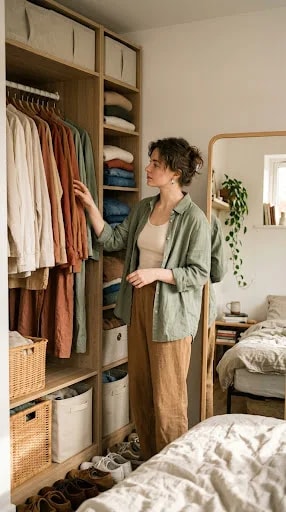
Start with the hanging rail, because it does the most visual work. Keep only the pieces you actually wear this season, hang them on matching slim hangers, and group by colour rather than by category. A run of cream, oatmeal, sage and rust linen looks intentional; a random mix of prints looks like laundry. Leave a hand's width of empty rail at each end so the clothes do not press against the wardrobe frame, and let longer dresses and coats sit at one end to create a soft vertical line that draws the eye upward, making the ceiling feel higher than it is.
Folded stacks belong on the upper shelves where the eye rests less often, and they should be shallow: three or four items per pile, folded to the same width. Woven baskets and white fabric bins absorb the awkward things, scarves, chargers, off-season knitwear, and their texture softens the hard edges of a wooden carcass. Shoes lined up on the bottom shelf read as a considered collection when they are paired heel to toe and limited to the pairs in rotation. Anything without a home is the beginning of the mess.
Lighting and reflection finish the job. A small bedroom with an open wardrobe needs a mirror nearby, and a leaning full-length one beside the frame bounces daylight into the hanging rail so the clothes are actually visible. A trailing plant on the top shelf, a mug on the bedside table, a rumpled duvet in the foreground: these small signs of life keep the setup from feeling like a shop display. Soft daylight from a single window is enough, and it flatters the earthy palette far better than an overhead bulb.
What makes this work in a tight room is restraint. The wardrobe holds what fits, the floor stays clear, and the mirror does the rest. Measure the rail, count the hangers, and let the empty space between the clothes be part of the design rather than a sign you have not finished unpacking.