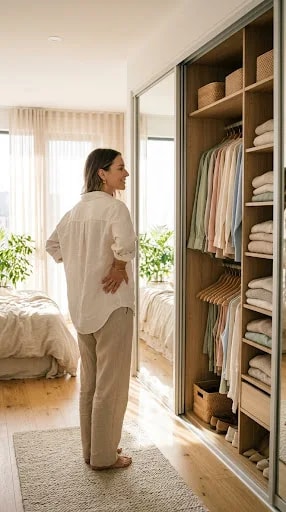
There is a specific kind of quiet that happens in front of an open wardrobe at 7am. The woman in this bedroom is standing in it — hand on hip, head tilted, not rushing, simply deciding. Her sliding door is pushed back and the mirrored panel catches the window light, doubling the room and softening the edges of everything inside. This is the version of wardrobe design worth copying: not a storage unit that hides your clothes, but a small, well-lit stage where the daily decision feels unhurried.
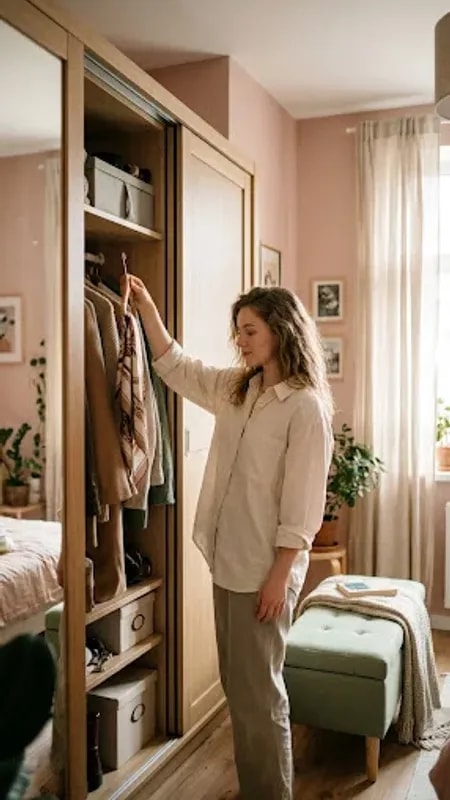
Mirrored sliding doors earn their place here because they work twice. Closed, they bounce daylight from the window across the bed and the pale walls, which is why a compact bedroom can hold a full-height closet without feeling crowded. Open, the mirror becomes the practical half of the routine — a quick check of the shoulder line before you leave. If you are choosing panels, favour one mirrored door and one in a warm painted finish rather than a fully mirrored wall; the mix keeps the reflection useful instead of overwhelming, and it lets the wood tones inside the closet do some of the talking.
Look at what is actually on those shelves and the real lesson appears. Pastel shirts and dresses hang on a single rail with breathing room between hangers, white towels are folded into a neat stack, and woven baskets take the things that never look tidy on a shelf. The palette is deliberately narrow — cream, beige, soft green, a little blush — which is why the closet reads as calm rather than busy. Sliding doors reward that discipline. Because only half the wardrobe is visible at once, an overstuffed rail looks chaotic fast, so edit seasonally, keep one empty hand's width at the end of the rail, and give bulky items a basket instead of a hanger.
On the practical side, sliding systems need a clear run. Measure the wall before you commit, leave enough clearance so the panels never foul a bedside table, and choose soft-close runners — a door that glides shut with one finger is the difference between a wardrobe you enjoy and one you avoid. Keep the floor beneath the track empty of shoes and bags so the bottom of the door stays scratch-free. Taller panels, ideally floor to ceiling, make the ceiling feel higher and remove the dusty gap on top that collects clutter.
The result is not really about storage at all. It is about a room that lets you think, light that reaches the corners, and clothes arranged so the choice takes thirty seconds instead of ten minutes. The pause in front of the open door is the point — a small, sunlit moment of order before the day starts.