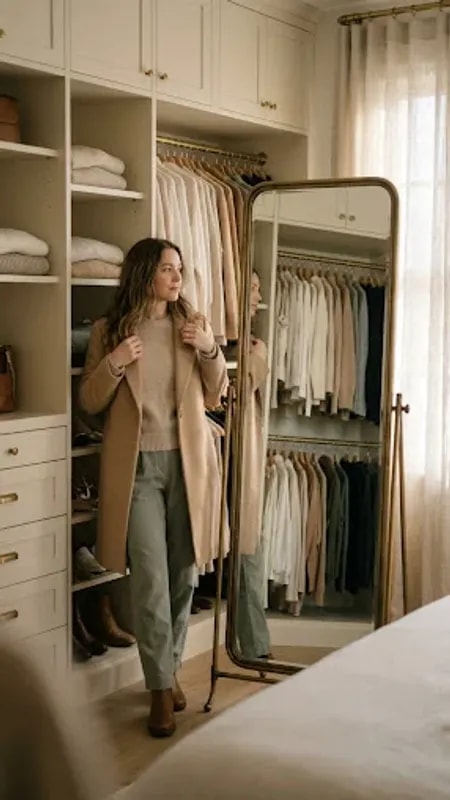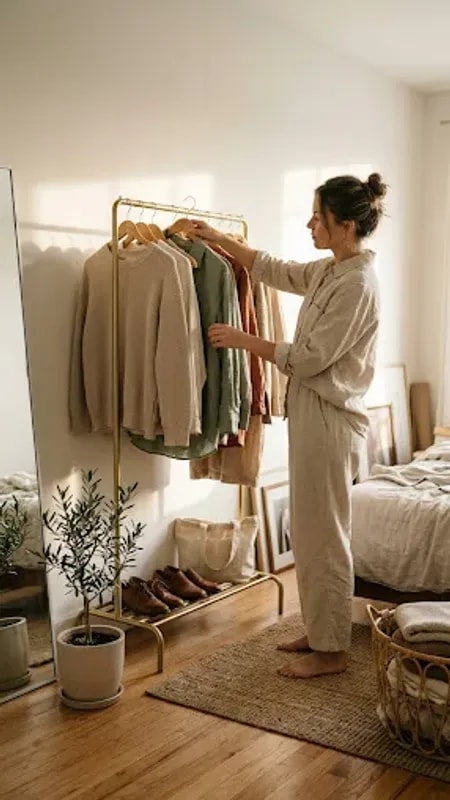
There is a particular kind of quiet in a bedroom where the wardrobe stands out in the open. Morning light comes through sheer curtains, a barefoot walk across warm wood, and one reach to the left is all it takes to find the sage sweater you wanted. A freestanding rack placed near the window does something a closed closet never can: it puts your clothes in view, and being in view changes how you choose them.
The trick is to stop treating the rack as overflow storage and start treating it as a small shop floor. A single rail holds somewhere between fifteen and twenty-five hangers, which means every piece earns its spot. Before anything goes up, ask the boutique question: would this survive a week on display? Wrinkled tees, orphaned buttons, and the jeans that never quite fit get edited out. What remains reads like a point of view rather than a pile, and that coherence is what makes the morning decision feel effortless instead of loud.
Structure does most of the heavy lifting. Wooden hangers keep shoulders from sagging and add a warmth that plastic never will, and grouping by category rather than color makes the rail faster to scan. Tops on the left, denim and dresses toward the right, with the pieces you reach for most at eye level. The lower shelf is where the softer stuff lives: folded knitwear in short stacks, a basket for belts and scarves, white bins for the things that refuse to fold neatly. Leave a little breathing room between stacks. Empty space is not waste, it is what makes the whole setup look intentional.
Placement matters as much as the edit. Tuck the rack beside a window, just clear of the curtain hem, and let daylight do the styling for you, since natural light is honest about color and texture in a way overhead bulbs are not. A leafy plant nearby softens the hard vertical lines, and a rumpled linen bed behind it keeps the scene lived-in rather than showroom-stiff. If you like to rearrange, choose a rack with casters; if it will stay put, anchor it to the wall so a full rail of denim does not wobble.
Then comes the reward. When the rack holds only what you genuinely wear, dressing collapses into a single glance and a two-minute reach. Rotate the collection at each season change, retiring heavy coats and bringing forward the lighter layers, and the rack stays a fresh edit rather than a slow accumulation. It is a small piece of furniture doing quiet, daily work.