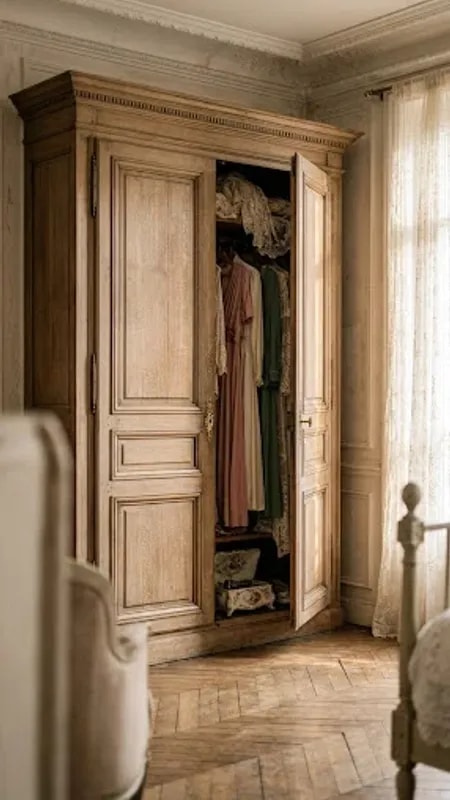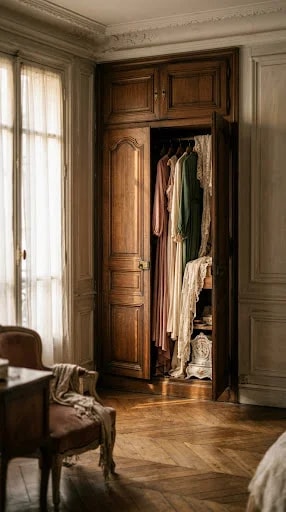
The first thing this wardrobe does is refuse to look like a wardrobe. Its dark oak doors sit flush with the plaster, the overhead cupboards align on the same plane, and a molded cornice caps the whole run so the cabinet finishes where the room finishes. Nothing protrudes, nothing announces storage. In a period house, that single decision buys more atmosphere than any amount of applied decoration, because the eye reads paneling as part of the building rather than as a piece of furniture that arrived last year.
Getting that seamlessness depends on the carcass, not the door style. Set the frame back into the wall so the door faces land nearly level with the surrounding plaster, then size the panel proportions to the room's existing trim — skirting height, picture rail line, window reveals. Stained oak with a low-sheen finish suits a room like this one, where the herringbone parquet already carries plenty of pattern; painted paneling works equally well in paler rooms, with a shadow gap instead of bolection molding to keep the edges quiet. Either way, resist the urge to add hardware that catches the light. A small brass escutcheon or a simple turned knob is enough.
What makes the built-in feel vintage rather than merely bespoke is what it holds when the door is open. Inside, the rail is deliberately edited: dusty pink, cream, and sage green, with lace hems trailing below the shorter pieces. Folded linens stack on the shelf beneath, and a painted ceramic jug sits among them purely because it belongs. The trick is restraint — three faded tones inside the cabinet, a visible gap of air between garments, and one object on the shelf that has nothing to do with getting dressed. That is what makes the interior look collected over decades instead of merchandised in an afternoon.
Light does the rest. A window dressed only in sheer linen throws a soft, directional wash across the open door, catching the carved detail and then fading into warm shadow along the floor. If your wardrobe faces a bright wall, leave the glass bare enough to feed it; if it sits in a dark corner, warm bulbs at the top of the interior will do more than any cool-white strip. The chair and the stacked books beside it are not styling props so much as proof that the room is used.
Practically, a built-in forgives what a freestanding armoire cannot. It reclaims the awkward alcove, adds a drawer bank without a second footprint, and lets you ventilate properly — worth planning for in an old wall, where air circulation keeps damp and moths at bay. Line the shelves with cedar or tuck in a sachet, keep a small gap behind the hanging rail, and the cabinet will hold its calm for a very long time.