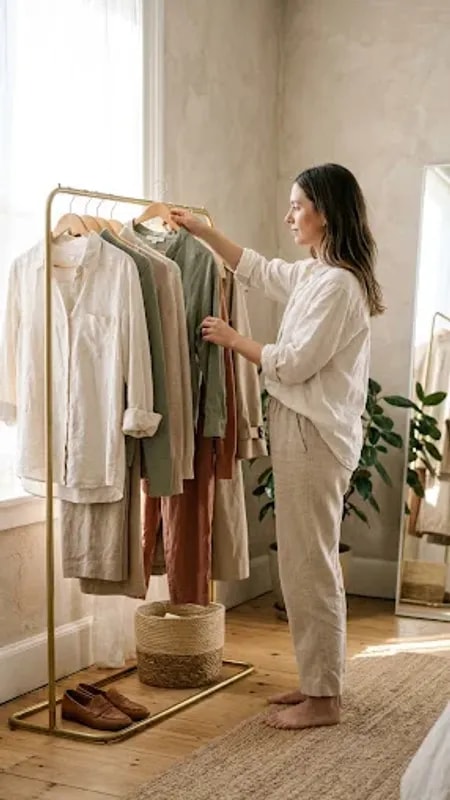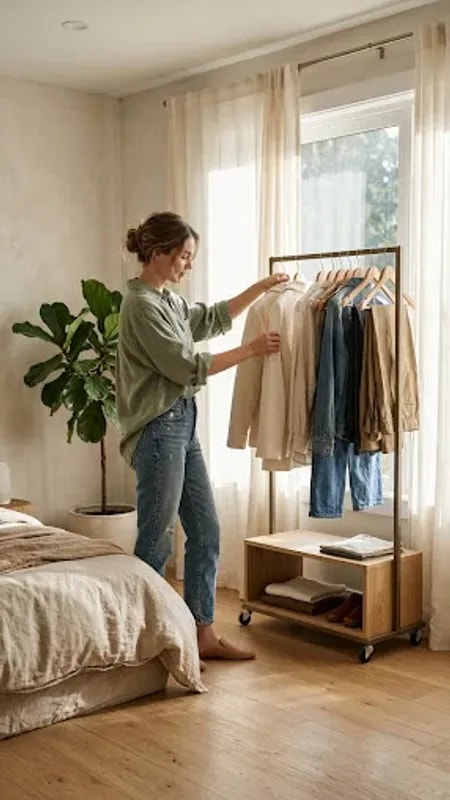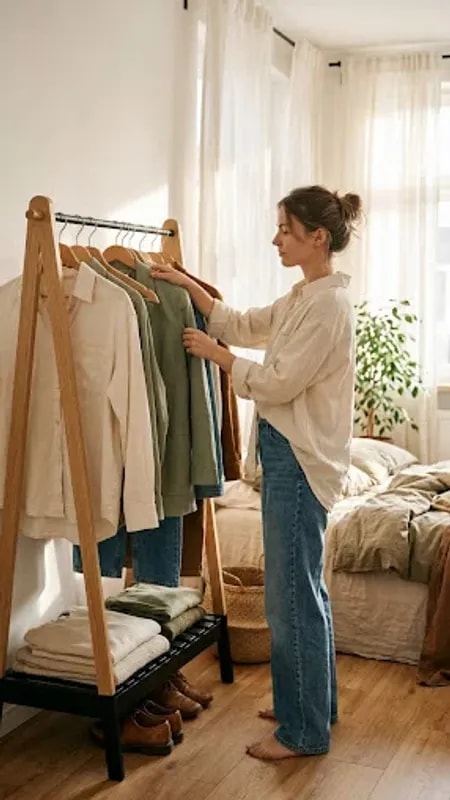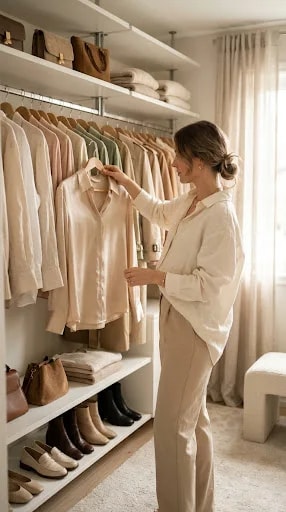
There is a particular kind of stillness in a closet before the day starts. In this image, a woman in an oversized cream shirt and beige tailored trousers stands at the rail, one hand lifting a hanger, head tilted as she considers. She is not hunting. She is browsing, and the difference matters. The light comes in diffused and warm from sheer curtains on the right, falling across her shoulder and the row of neutral shirts and jackets beside her. Nothing in the frame is shouting for attention, which is exactly why the scene reads as aspirational rather than staged.
Look at how the space is organized and the wardrobe ideas start to explain themselves. The hanging rail sits at eye level, holding only what she wears most — shirts, jackets, soft tailoring in cream, sage, and blush. Above and to the left, open shelves carry handbags and folded knitwear, stacked in loose, breathable piles rather than tight columns. Below, boots and loafers line up on the floor with room to breathe between pairs. A low bench sits near the window, and it is the quiet hero of the composition: a place to sit, pull on a boot, set down a cup, or simply pause before committing to an outfit.
The color story does most of the visual work. Creamy beige, tan, a wash of blush, a thread of sage, and grounding brown with a few dark accents — this is a palette built so that everything can be worn with everything else. That is the practical gift of a neutral wardrobe: getting dressed stops being a puzzle. When the rail holds a narrow range of tones and textures, browsing becomes editing. She can pull three pieces at random and they will hold together, which is why the moment in the photo looks effortless rather than indecisive.
Texture keeps the neutrals from turning flat. The crisp cotton of her shirt against the soft drape of her trousers, the grain of leather on the boots, the nubby wool of folded knitwear on the shelf — each surface catches that warm window light a little differently. Even the hangers matter, spaced evenly enough that fabric never crushes and you can see each garment at a glance. The composition reinforces the habit: the wardrobe fills the left and center, the woman stands to the right, and the eye travels a calm, guided line from shelf to rail to bench to light.
To borrow from this scene, start with the rail. Keep only pieces you reach for weekly, hang them in a tonal run from light to dark, and let the shelves above hold the accessories that finish an outfit rather than compete with it. Add a bench, clear the floor, and let the window do the rest. The goal is not a showroom. It is a small, well-lit space where the daily act of choosing something to wear feels less like a chore and more like a few unhurried minutes to yourself.