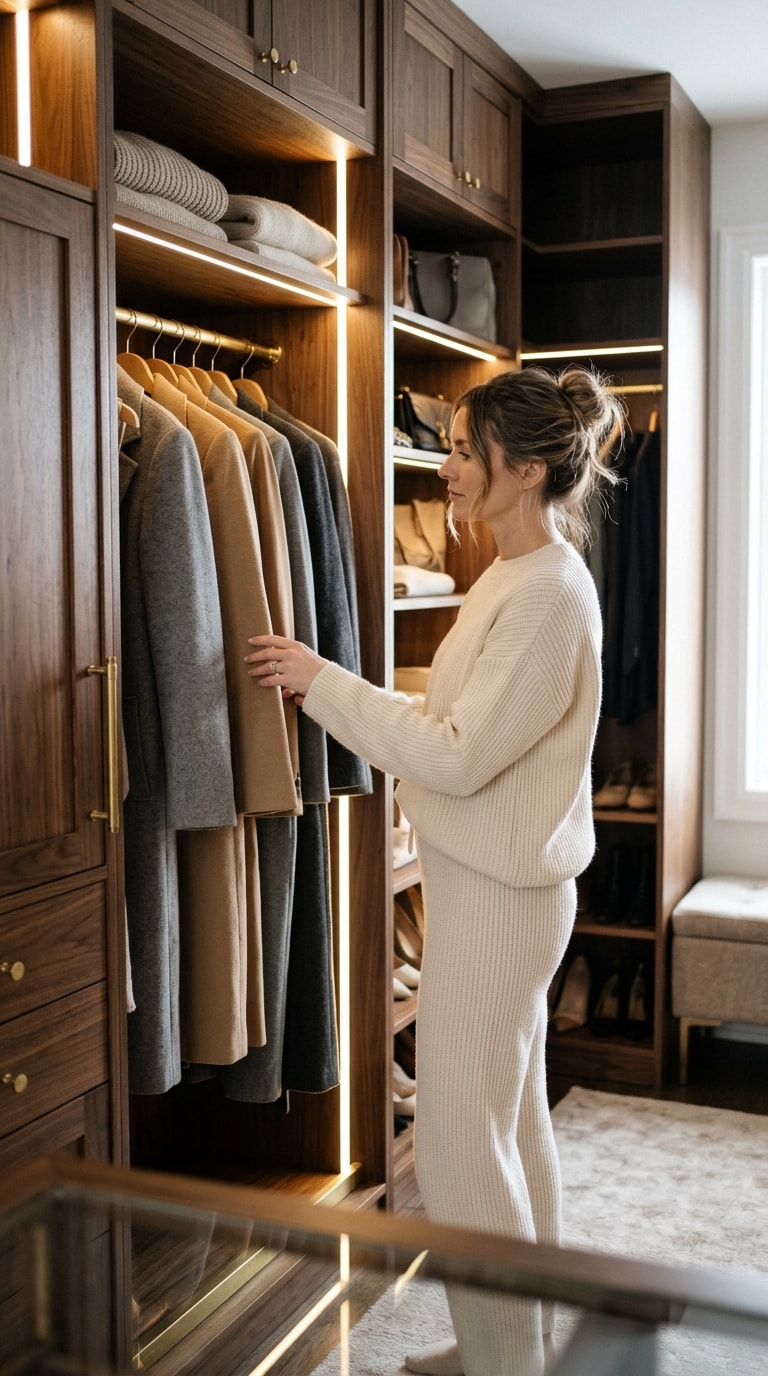
Look closely at the moment captured in a well-lit walk-in: a woman in a textured cream set, turned in profile, one hand lifting a grey coat from the rail. The wood behind her is a deep, grained walnut, the shelves hold folded oatmeal knitwear and handbags, and running along the uprights are thin ribbons of warm LED light. Nothing about the scene feels lit. It feels simply visible — which is the whole trick, and the whole point of designing wardrobe lighting around the reach rather than around the room.
Most closets get one ceiling fixture and call it done, which floods the floor and leaves the hanging rail in shadow. The better instinct is to treat light as a tool for decisions. A vertical strip mounted on the inner face of each upright, roughly from hip height to just above the rail, throws soft light across the fronts of garments at the exact angle your eyes meet them. You see the true colour of a camel coat against a soft grey one, the texture of a bouclé jacket, the difference between two near-identical navy blouses. Aim for 2700K to 3000K and a colour rendering index of 90 or above; below that, warm neutrals go muddy and everything reads a shade greyer than it is.
Then layer the light to match the layers of the wardrobe itself. Slim strips tucked under each shelf wash down over folded knitwear so you can read a stack at a glance. A low toe-kick glow keeps the floor from going black underfoot and makes the whole cabinet appear to float. Small puck lights in the upper corners pick out handbags and shoe shelves, and brass hardware — pulls, rail brackets, the hooks where a coat lands at the end of the day — catches and holds that warmth in a way no overhead downlight ever will. Always specify diffused channel, never bare tape; a visible diode dot reflected in a mirror or a lacquered door is the fastest way to undo an expensive-looking interior.
A few practical notes worth taping to the plan. Route cable and drivers during the build, not after — a shallow recess behind the back panel or inside a top box hides everything and keeps the interior calm. Put the whole system on a dimmer, ideally with a door or motion sensor set to a gentle fade, so the wardrobe opens into light instead of a switch hunt at six in the morning. And keep a small gap between the strip and the shelf edge so the beam spreads rather than stripes.
Get the placement right and the payoff is quiet. The light is never the subject; the coat is, the folded sweater is, the unhurried minute you spend choosing between them is. That is what a well-lit wardrobe actually buys you — not brightness, but the calm of seeing exactly what you have.