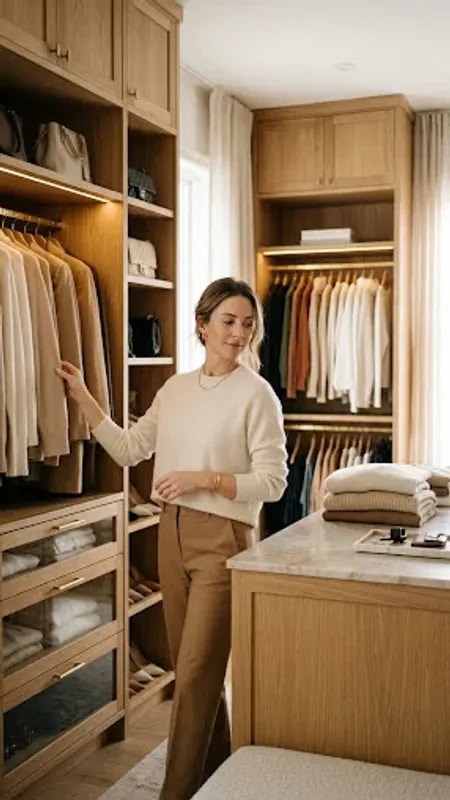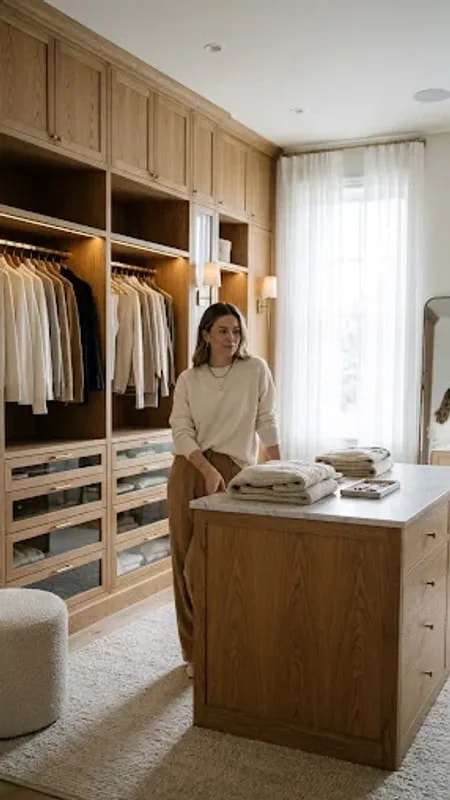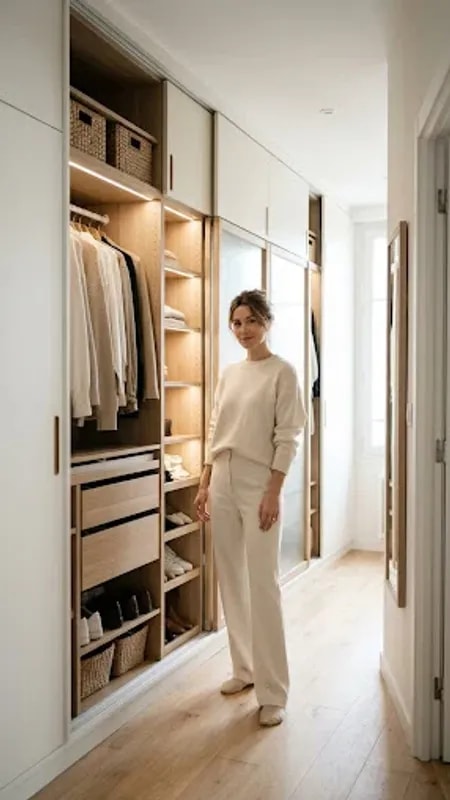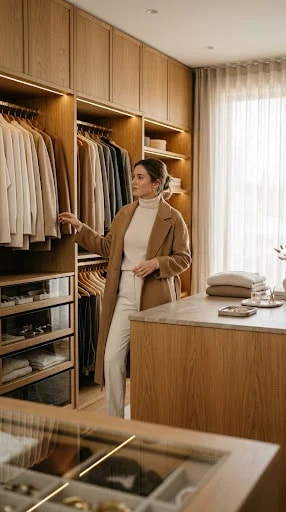
A large walk-in closet can easily become a storage room with better lighting. What separates a genuinely useful big wardrobe from a merely spacious one is restraint: a tight color story, a place for everything, and enough breathing room between the racks that getting dressed feels like a decision rather than a search. The closet in the image gets this right. Creams, beiges, and taupes run from the shelving to the folded sweaters, and the few dark pieces read as punctuation instead of clutter. Before you buy a single insert or basket, decide on that palette. It is the cheapest and most powerful organizing tool you have.
Start with the hanging space, because it carries the most visual weight. Keep long items together at one end, separates in the middle, and leave a clear gap of empty rod between categories. That gap is not wasted space; it is what makes a packed closet look curated. Match hangers across the board, ideally slim velvet or wood in one finish, and face every garment the same direction. Folded stacks belong at eye level and no higher than four or five pieces deep, otherwise the bottom sweater becomes invisible and you buy a duplicate you already own. Open shelving above the rod is ideal for handbags and out-of-season shoes, provided each bag holds its shape with a little stuffing.
The central island is the quiet hero of a big wardrobe. Drawers keep jewelry, belts, and folded basics out of sight, while the counter gives you somewhere to set down a coffee cup or lay out three outfit options side by side. If your room is wide enough for one, keep the walkway around it at least three feet on every side so the drawers can open without blocking your path. Lighting matters just as much. Soft, even light from above and inside the cabinets flatters colors and prevents the classic mistake of pulling on a navy piece that looked black at 7 a.m.
Finally, plan for the wardrobe to change. Seasons rotate, styles shift, and a closet designed only for what you own today will feel tight within two years. Reserve one shelf and a short rod for overflow and rotation, and treat the island surface as a staging area that gets cleared weekly rather than a permanent landing zone. Big wardrobe ideas are rarely about adding more storage. They are about spacing, palette, and a few deliberate empty zones that let a generous room stay serene, so choosing an outfit takes minutes instead of a mood.