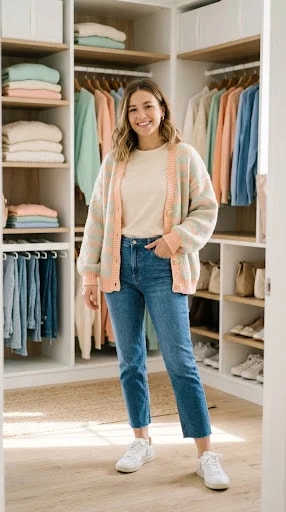
Looking at this meticulously organized dresser menu, the first thing that strikes you is the harmony. This isn't a random assortment of clothes; it's a curated collection built on a foundation of soft neutrals. The consistent use of beiges, warm whites, muted grays, and dusty blues creates a visual language that ties every piece together. It demonstrates a fundamental principle of real-world style applied within the game: a limited, thoughtful palette ensures everything mixes and matches effortlessly.
This approach is liberating for players who want stylish Sims without the overwhelm of custom content. By focusing on a specific tonal range within the base game's offerings, you automatically filter out clashing items and create a wardrobe with built-in versatility. That sleek gray blazer pairs naturally with the cream trousers, while that simple blue top complements multiple skirts and jeans. The system does the heavy lifting, allowing you to focus on creating outfits that look intentionally put-together.
Beyond aesthetics, a palette-driven wardrobe simplifies gameplay. Dressing your Sims becomes quicker and more enjoyable when you're not sifting through hundreds of mismatched options. It encourages you to explore the full depth of items you might have overlooked, appreciating the subtle variations in texture and cut that exist within a single color family. This method turns the act of getting dressed from a chore into a creative, satisfying part of the simulation.
The result is a Sim whose style feels authentic and considered, as if they have a distinct personal taste. An outfit assembled from this cohesive closet tells a story about the character, whether they're heading to a casual brunch or a business meeting. This visual proof makes it clear that with a little strategic planning, the base game provides all the tools necessary for crafting a truly lovely and functional digital wardrobe.