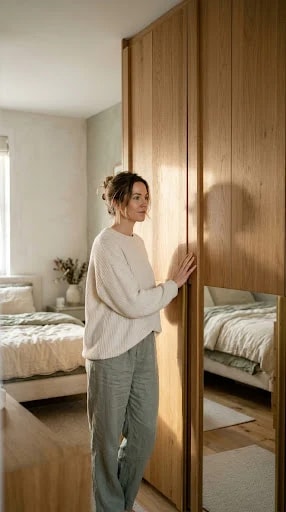
There is a particular kind of calm that arrives when everything has a place. In this bedroom, the proof is a floor-to-ceiling oak wardrobe that runs the full height of the wall, its warm honeyed grain softening the white room around it. Nothing is stacked on top, nothing spills from a half-open door. The woman in the oversized cream knit and sage trousers simply rests a hand on the frame and looks toward the window light. The wardrobe does the quiet work in the background.
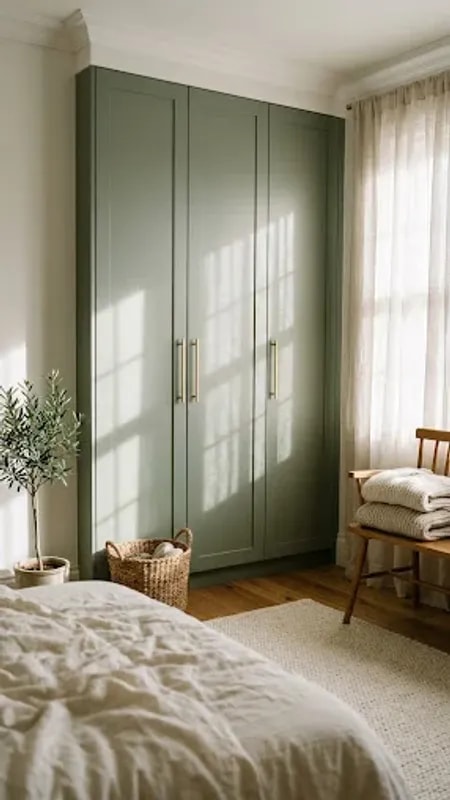
That is the real argument for going built in. A freestanding piece of furniture asks you to work around it, and the gap behind it, above it, and beside it becomes a place where clutter quietly gathers. A built-in wardrobe is designed to the millimetre, closing the distance between wall and storage. In a room with standard ceiling height, that extra vertical span is often the difference between hanging space that feels tight and hanging space that finally accommodates a long coat. Measure the full height from floor to ceiling before anything else, then decide whether a simple flat panel or a soft shaker profile suits the room. Here, plain oak fronts with slim shadow gaps keep the wall looking like architecture rather than furniture.
A mirrored section is the detail worth stealing. Notice how the reflective panel picks up the unmade bed, the cream bedding, and the light from the left, giving a narrow room a second window without a second window. It also makes the morning routine easier, since a full-length view sits right where the clothes are. If you mirror a door, choose one on the side nearest the daylight so the reflection brightens rather than darkens the space, and keep the mirror inside the frame line so the wardrobe still reads as one continuous surface.
Inside, resist the urge to fill every centimetre with shelving. A calm wardrobe is mostly hanging space with a short run of shelves at eye level for folded knits, a drawer bank at hip height for smaller items, and one tall slot for the ironing board or the suitcase that otherwise lives under the bed. Warm interior lighting on a door sensor is a small luxury that pays off on dark winter mornings. Finish the interior in the same pale tone as the bedroom walls and the open door will never look like a dark cavity.
What makes this corner feel lived in rather than staged is everything the wardrobe is not doing. The dried flowers on the bedside table, the textured rug underfoot, the rumpled linen left as it is. Good built-in storage does not demand attention; it removes the small daily friction of searching, shifting, and tidying, and hands the morning back to you. Plan the wardrobe around the life you actually have, and the room will keep its softness even on the busiest weekday.