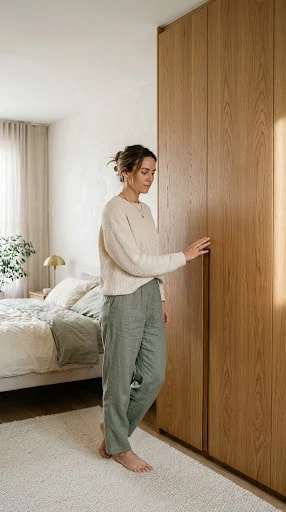
The first thing you notice in this bedroom is not the storage capacity — it is the hand resting flat against the oak. A woman in a cream knit sweater and sage trousers stands barefoot at the end of a floor-to-ceiling run, palm against a plain wood door, and the whole room seems to slow down around her. Daylight enters from the left and lays a warm rectangle across the grain, catching the slim vertical handles and the soft shadow lines between panels. Behind her, a low bed with rumpled white and sage bedding, a bedside lamp, a leafy plant and sheer curtains recede quietly. The wardrobe dominates the frame, yet it never feels heavy.
That effect comes from restraint. Flat slab fronts do the quiet work here: no shaker beading, no mouldings to collect dust, no hardware competing for attention. Because the doors run from skirting almost to the ceiling, the eye travels upward and the room reads taller than it is. Slim bar handles set vertically, or push-latch openings on the most-used doors, keep the run looking like architecture rather than furniture parked against a wall. If you are planning a similar build, ask for door gaps of three millimetres and a plinth that matches the skirting colour so the base disappears.
Oak is forgiving in a way gloss never is. A matte finish with visible open grain softens the light instead of bouncing it back, and a warm mid-tone sits comfortably beside cream, muted green and white. Align the vertical panels with the door edges so the grain becomes the only ornament the wall needs. Then watch what happens through the day: sun moves across the surface, shadows lengthen in the gaps, and the cabinetry changes character without a single thing being added or moved.
The interior deserves the same care. Plan the run around what you actually wear rather than a generic grid: a full-height section for coats and long dresses, double hanging for shirts, and shallow drawers at hip height for folded knitwear. Sixty centimetres of depth suits hanging; forty is plenty for folded stacks. A strip of warm LED beneath one shelf makes the interior legible on dark winter mornings, and a single internal drawer for loose things — belts, sunglasses, the spare keys — keeps the surfaces outside clear.
Finally, keep the surrounding room soft so the wardrobe stays the calmest element in it. A low bed, linen in white and sage, sheer curtains that filter rather than block, one plant, a flat rug underfoot. The reward is not a showpiece. It is a surface you touch every morning without thinking, and a room that feels tidier the moment you walk into it.