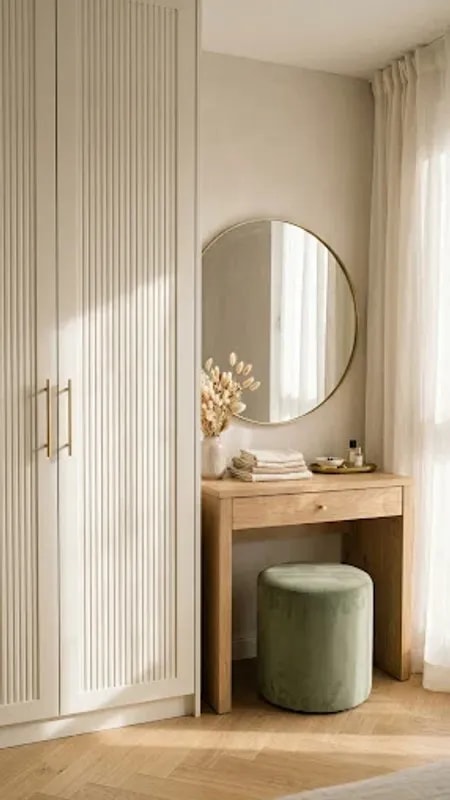
The corner works because it does two jobs without looking like it's trying. A tall white wardrobe runs the full height of the left wall, its fluted panels stacked in fine vertical lines that catch the light and soften what could have been a flat slab of cabinetry. Two long brass handles run down the doors like a drawn line, echoing the grain of the slats and giving the eye something graceful to follow. Because the wardrobe climbs all the way up, the ceiling feels higher and the floor stays clear, which is exactly what a small bedroom needs.
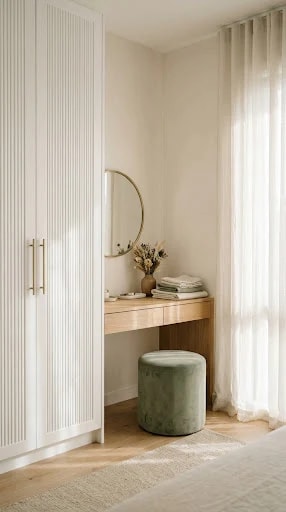
The smartest move here is the open bay cut into the run of storage. Instead of closing the whole wall, the design leaves a low, open niche and slots a floating oak vanity into it — a single drawer, no legs, no bulk. Floating furniture is a small trick with a big payoff in tight rooms: you still see the floor beneath it, so the corner reads as airy rather than filled. The honey tone of the oak also breaks up all that white, warming the wardrobe's crisp finish and tying the vanity to the pale rug and the edge of the made bed in the foreground.
Styling does the rest. A round mirror with a thin gold frame sits above the desk, its curve a gentle contrast to the wardrobe's strict verticals, and it bounces daylight deeper into the room. A small vase of dried grasses, a neat stack of folded towels, and little else keep the surface calm — this is a vanity, not a dumping ground. Tucked beneath is a cylindrical sage-green velvet stool, the only real color in the scheme, and it's enough. Sheer white curtains filter the light from the right, so everything is lit evenly and nothing casts a hard shadow.
If you're planning something similar, a few measurements matter. Give the vanity bay enough width for a stool to slide in and out comfortably, and keep the mirror low enough that you can use it seated. A single deep drawer beats open shelves for the small things — brushes, a hair clip, the one lipstick you actually wear. Add a warm-toned light near the mirror for evenings, and repeat the wood somewhere else in the room so the floating desk doesn't look stranded.
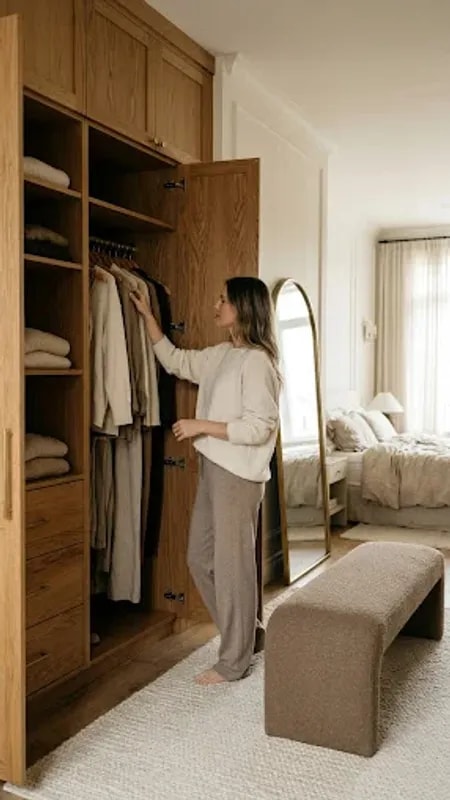
The overall palette is deliberately quiet: cream walls, honey wood, soft whites, one muted green. Against the dark-lined paneling of the wardrobe interior, all that lightness feels considered rather than empty. It's the kind of corner that makes a bedroom feel settled the moment you walk in — storage that disappears into the wall, and a small, sun-washed place to sit and start the day.