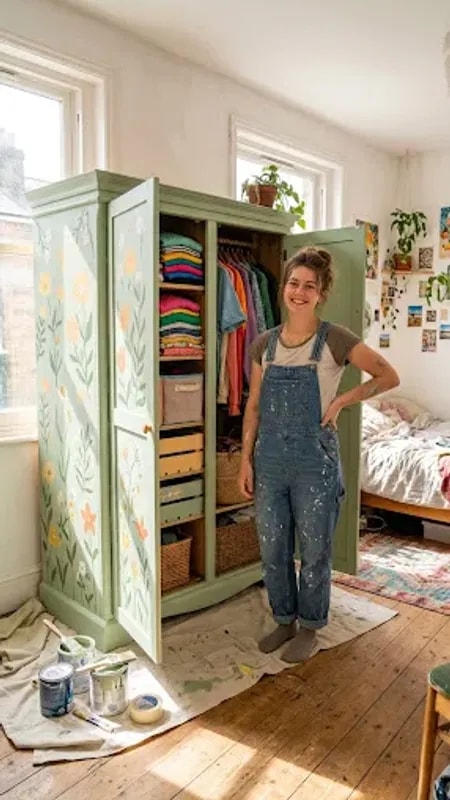
There is a particular kind of satisfaction in watching a piece of furniture everyone else gave up on become the best thing in the room. That is exactly what happens with an old wooden wardrobe, the kind you find at a flea market for the price of a takeaway dinner, sturdy but scuffed and stuck in a shade of brown that swallows all the light. A few cans of paint, a roll of tape, and one free afternoon can change everything. This is the friendliest entry point into wardrobe ideas DIY cheap, because wardrobes are big flat canvases that forgive mistakes far more easily than a chair leg or a drawer front.
Start with preparation, because it is the unglamorous step that decides whether your paint lasts a season or a decade. Empty the wardrobe, remove the doors and hardware, and give every surface a light sanding so the new paint has something to grip. Wipe away dust with a damp cloth and let the wood dry completely. If the original finish is glossy or the wood is dark, a coat of stain-blocking primer is worth the small extra cost; it stops old tannins from bleeding through and means you need fewer coats of your chosen color. Label the screws in a small dish or tape them to the inside of a door so nothing goes missing.
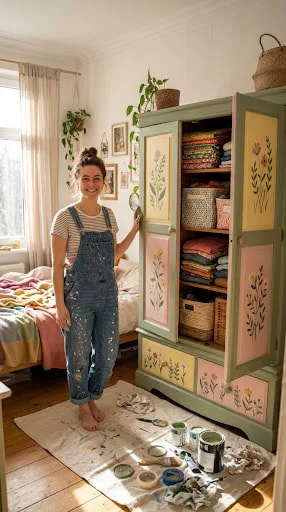
Now the fun part: color. The most forgiving palette for a bedroom is a soft, earthy one, and sage green earns its reputation for a reason. It reads calm in daylight, warm in lamplight, and it flatters almost any bedding you already own. Paint the main body of the wardrobe in that quiet green, then let the panels do the talking. Mask off the recessed door panels with painter's tape and brush them in cheerful yellow and blush pink, colors that cost nothing extra because they come from small sample pots. Once the panels are dry, add loose hand-painted flowers with a fine brush. Simple five-petal blooms and a few curved stems are enough. Nobody is judging your brushwork from across the room, and the slight wobble of a hand-painted petal is the charm, not the flaw.
Finish with a clear topcoat to protect all that effort, especially on the doors where hands will land every day. Reattach the hardware, or upgrade it cheaply: wooden knobs painted to match, ceramic pulls from a craft shop, or the original brass given a scrub with vinegar and a cloth. Inside, line the shelves with remnant wallpaper or contact paper and add woven baskets to corral scarves, socks, and folded knits. The open-door moment should feel as considered as the outside, because a wardrobe you enjoy opening is a wardrobe you will actually keep tidy.
One last thought on budget: the biggest savings come from patience. Buy the wardrobe secondhand, wait for paint sales, and use sample pots for the accent panels instead of full cans. A drop cloth, a decent brush, and a small roller will carry you through the whole project, and the leftover paint can go toward a matching bedside table later. Total spend is often less than a single flat-pack unit, and what you end up with is a one-of-a-kind piece with a story, sitting in the corner of your bedroom in exactly the colors you chose.