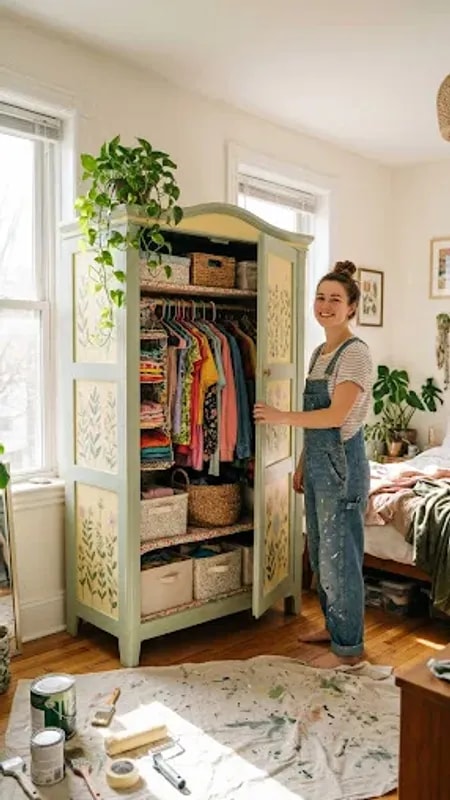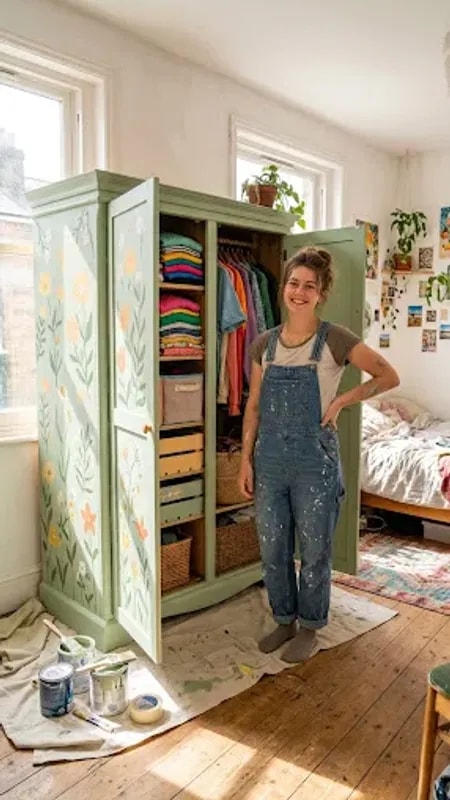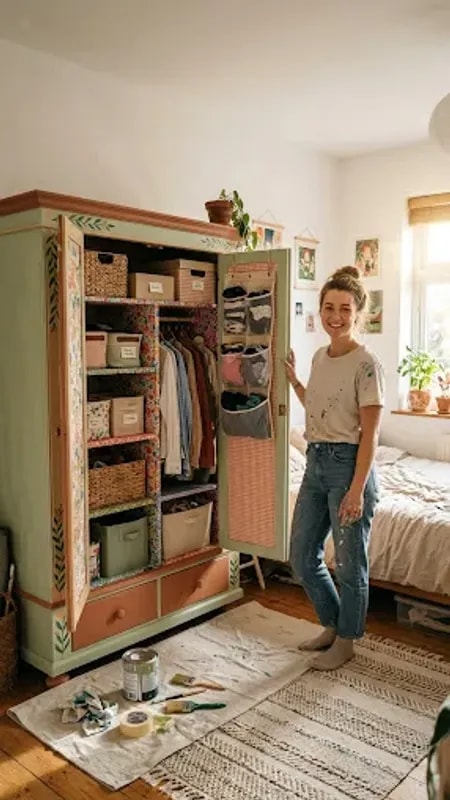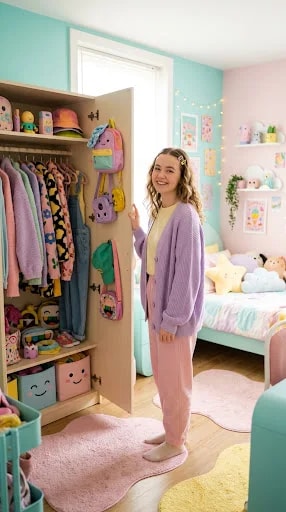
An open wardrobe does more work than a closed one ever could. The moment the doors stay swung wide, that corner of the room becomes a stage: the rail shows off outfits like a tiny boutique, the door turns into a gallery of bags, and the shelves hold bins with faces on them. If your kid keeps asking for a bedroom that looks like the game, start here rather than with the walls. The wardrobe is the anchor, and everything else in the room can arrange itself around it.
The hanging rail is where the magic is easiest to pull off. Skip the usual sorting by type and hang clothes as complete outfits instead: a patterned dress next to the cardigan that goes with it, a tee paired with its matching shorts. Grouping by color also works beautifully, moving from pinks and lavenders at one end to mints and pale yellows at the other, so the rail reads as a gradient rather than a jumble. Use slim matching hangers in white or natural wood, and leave a little breathing room between each piece. A crowded rail looks like laundry; a spaced one looks like a shop display.
The inside of the door is the most underrated surface in the whole room. Hang a few small backpacks and crossbody bags on adhesive hooks at kid height so they can reach them without climbing, and stagger the heights so the silhouettes don't line up like soldiers. Below the bags, a row of smiling storage bins in candy colors handles the small stuff that would otherwise end up on the floor. Clear or open-front cubbies let plush toys and folded tees stay visible, which is half the charm of the style. Add one framed piece of art or a small mirror on the door panel if there is space, and the wardrobe starts to feel like a room within the room.
Around the wardrobe, keep the floor as open as you can. A wavy pastel rug in two or three soft shades softens the hard lines of the furniture, and a strand of string lights draped above the frame adds warmth without much effort. Lean into repetition: pick one shape, like arches or clouds, and use it in the wall art, the bin labels and the rug so the corner feels intentional. Let a plush toy or two peek out from a low shelf. It reads as lived-in rather than staged.
You do not need to replace furniture to get this look. Repaint a tired shelf in a pastel, swap mismatched hangers for a single style, and add hooks and bins before you buy anything bigger. Then hand the styling decisions to your kid, because the best Toca Boca rooms look like someone with strong opinions and a lot of plush toys was allowed to arrange things their own way.