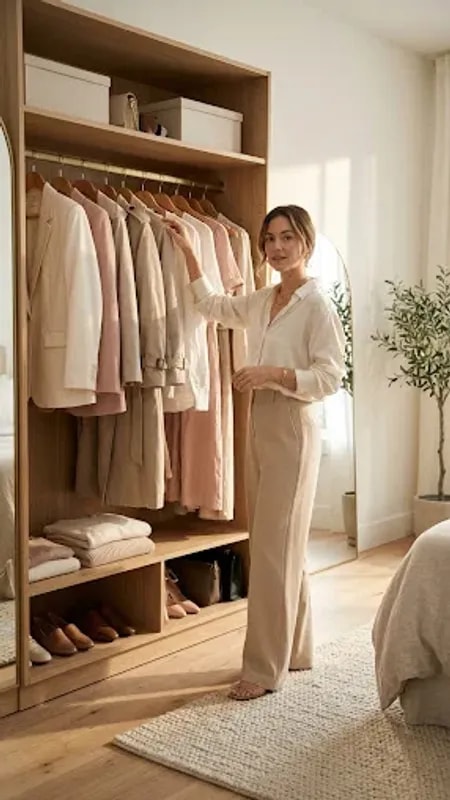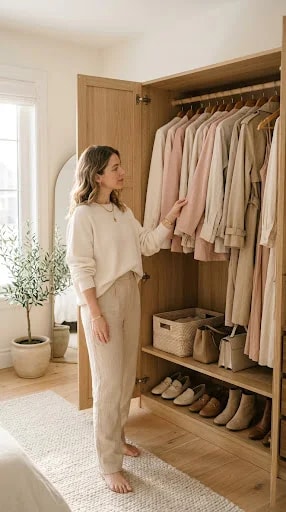
There is a moment in every well-planned closet that has nothing to do with outfits: the pause before choosing one. Standing barefoot on a textured rug, one hand resting on a hanging sleeve, you are not styling yet — you are scanning. A readymade wardrobe earns its keep in that pause. If the shelves are crammed, the hangers clatter, and the shoes are buried in a bin, the pause turns into a chore. If everything sits where your hand expects it, the same ten seconds feel like a small ceremony.
Start at the floor, because barefoot is how you actually meet your wardrobe. A low shelf holding flats and ankle boots in a single row does more for a morning than any hanging rod. You can see the toe of every pair, step into one, and move on. Keep the shelf shallow so nothing hides behind anything else, and leave the deepest baskets for soft, forgiving things — folded knitwear, scarves, a spare throw. The woven texture of a basket also softens the hard edge of a wooden carcass, which is why a run of two or three at the bottom reads as furniture rather than storage.
Color does the heavy lifting above waist height. A tonal run of pale pink, cream, and beige on matching wooden hangers looks deliberate even when you have not thought about it, because the eye reads the gaps between garments as rhythm rather than emptiness. Match your hanger type across the whole rod; mismatched plastic is what makes a full closet feel chaotic. Hang the longest pieces at the far end so hems clear the shelf below, and give the pieces you touch daily a little extra air on either side. A garment you can slide out with two fingers is a garment you will actually wear.
Light is the honest editor. In this corner, daylight arrives from the left, past a potted olive tree, and rakes across the hanging rail — good light shows the true difference between a cream sweater and an ivory one, which fluorescent overheads will happily blur. A leaning mirror placed near the window does the rest, letting you check the full line of a trouser before you commit. Nothing in the room needs to be bright or clever. The rug, a glimpse of bedding, a bag on a hook: these are just quiet anchors that keep the composition from becoming a storage unit.
Leave one empty hanger at the end of the rod. It is a small thing, but it keeps the whole arrangement breathing, and it makes room for the piece you forgot you loved.